
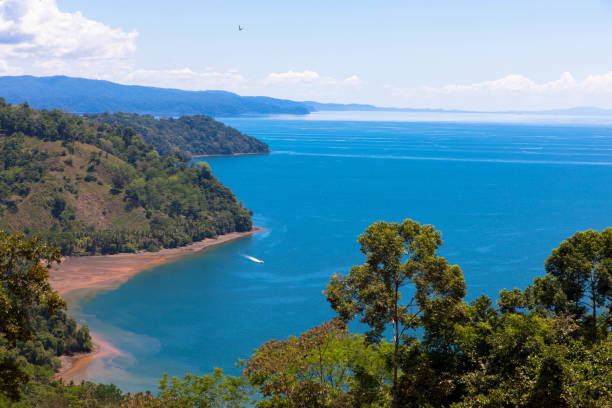
If you’ve been researching oceanfront property in Guanacaste, there’s a good chance you’ve typed “Is Nosara Estates legit?” into a search bar. That’s a smart move, not a red flag on your part. Buying real estate in another country, especially a pre-construction or phased development, deserves the same scrutiny you’d apply to any major financial decision, and probably more.
This guide isn’t meant to talk you into anything. It’s meant to walk you through the same questions any careful buyer should ask about Nosara Estates, a private residential community in the hills above Nosara, Costa Rica, and to explain how you can verify the answers yourself rather than taking a brochure’s word for it. Along the way, we’ll cover what “legitimacy” actually means in the context of Costa Rica real estate, what to look for when you visit a development, and how the broader process of buying property in Costa Rica works so you can make an informed decision whether that decision is about this community or another one.
Why People Ask “Is Nosara Estates Legit?”
Skepticism around international real estate isn’t unusual, and it isn’t unfair. A few dynamics make buyers cautious, and rightly so:
- Costa Rica’s title and zoning system works differently from that of the U.S. or Canada. Buyers accustomed to MLS listings, title insurance companies, and standardized disclosures sometimes assume similar systems exist here in the same form, and get uneasy when they don’t see a familiar process.
- Pre-construction and phased developments are inherently forward-looking. When a project is sold in phases with some homesites built out and others still in progress, it’s natural to wonder how much is real progress versus rendering and marketing language.
- The internet is full of secondhand information. Forum posts, outdated blog articles, and thin reviews about Nosara-area developments circulate widely, and it’s not always easy to tell which information is current or accurate.
- “Too good to be true” pricing raises eyebrows. When ocean-view homesites are priced well below comparable U.S. coastal markets, buyers reasonably want to understand why.
None of these concerns mean a project is illegitimate. They mean due diligence matters. The right response to “is this legit?” isn’t a reassurance; it’s a process you can run yourself.
What Buyers Should Verify Before Investing
Before wiring a deposit anywhere in Costa Rica, run through this checklist. It applies to Nosara Estates, and it applies to any development you’re considering.
1. Confirm the property is registered
Every titled property in Costa Rica is recorded with the Registro Nacional (National Registry). You or your attorney can pull the folio real (title record) to confirm:
- Who legally owns the land
- Whether there are liens, mortgages, or encumbrances
- The registered size and boundaries of the parcel
2. Hire your own attorney — not the developer’s
This is the single most important step in buying property in Costa Rica. A qualified, independent Costa Rican real estate attorney (not one recommended exclusively by the seller) should review the purchase agreement, confirm title status, and explain how funds will be held and disbursed.
3. Use a regulated escrow service
Reputable developments route deposits and payments through a licensed, regulated escrow agent, not directly into a company’s operating account. Ask specifically which escrow provider is used and confirm it independently.
4. Verify corporate registration
Costa Rican development companies are typically structured as a registered corporation (S.A. or S.R.L.). Ask for the legal entity name behind the project and confirm it’s active and in good standing.
5. Visit in person before you commit
No brochure substitutes for walking the land. A site visit lets you see current infrastructure, talk to existing owners if possible, and evaluate the drive from the airport, the terrain, and the neighborhood realistically.
6. Read the fine print on pricing and incentives
Phased pricing, “cash-back” incentives, and reservation-fee promotions are common in Costa Rica real estate marketing. They aren’t automatically a problem, but you should understand exactly what a deposit is refundable for, what triggers forfeiture, and how price locks are documented in writing, not just stated verbally.
Evidence of Active Development at Nosara Estates
One of the more useful ways to evaluate any phased community is to separate marketing language from what’s physically observable on-site. At Nosara Estates, the development is described as a private residential community in the hills of Nosara featuring completed homes, paved roads, and ongoing construction, in other words, a mix of finished product and active buildout rather than a project that exists only on paper.
When you’re evaluating this kind of claim, look for the following concrete, verifiable signs of progress:
- Completed homes you can walk through, not just renderings
- Paved roads and graded infrastructure are already in place, rather than promised for a future phase
- Utilities and services — power, water, and drainage are extended to homesites, not just mapped on a plan
- Gated community infrastructure, including security and access control, is functioning today
- Visible construction activity, such as homes actively being built on neighboring lots
- Amenities under development or completed, such as fitness facilities, sports courts, and community gathering spaces
The point isn’t to take any single claim at face value; it’s to ask to see these things directly during a visit, and to compare what’s shown against what’s described online. A legitimate, transparent development should have no issue letting you walk the roads, inspect a completed home, and meet the people currently building or living there.
Understanding Costa Rica Real Estate Transparency
Costa Rica has a functioning, title-based property system, but it operates differently from what many North American and European buyers are used to, and understanding those differences is part of real transparency.
Key facts about the system:
- Costa Rica has strong protections for titled property (registered fee-simple ownership), which is what most residential developments, including gated communities, are built on.
- Coastal land within the Maritime Zone (roughly the first 200 meters from the mean high tide line) is subject to different rules: the first 50 meters are public land, and the next 150 meters are concession land with restrictions on foreign ownership. This is why it matters whether a property you’re considering is titled land or concession land, and confirming which one applies to a specific homesite is a reasonable question to ask directly.
- Foreign nationals can generally hold titled property in Costa Rica on the same basis as citizens. This is a long-standing legal reality, not a workaround.
- Property transactions are recorded publicly, which means ownership history, liens, and boundaries are matters of public record that you or your attorney can pull directly.
- There is no MLS-style national listing system as robust as in the U.S., which is part of why buyer-side legal representation matters more here, not less.
Understanding this system rather than assuming it mirrors your home country’s is the foundation of any solid Costa Rica real estate guide, and it’s the context in which any specific project’s claims should be evaluated.
What Makes Nosara Estates Different
Beyond the general due-diligence steps above, a few characteristics are worth understanding specifically about this community when you’re comparing it to other options in the area.
Location and lifestyle positioning. Nosara Estates sits in the hills above Nosara, a coastal town in Guanacaste that has repeatedly drawn recognition from travel and lifestyle publications as one of the more desirable places to live or vacation in Costa Rica. Its location contributes to the appeal of ocean-view property and the surrounding Costa Rica lifestyle investment case, proximity to beaches, surf breaks, an established expat community, and a walkable town center.
Community structure. The development is organized as a gated community with centralized security, meaning access is controlled rather than open to the public through traffic, a structural feature that matters to buyers prioritizing privacy and security alongside lifestyle.
Homesite-first model. Buyers purchase luxury home sites first with the option to build a custom home afterward, rather than only buying pre-built, finished units. This is common in the Nosara Estates development structure and elsewhere in Costa Rica, and it means part of your due diligence should include understanding architectural guidelines, build timelines, and whether construction is optional or required within a set window.
Amenities package. The community’s stated amenities include 24-hour gated security, on-site maintenance and housekeeping support, a fitness facility, sports courts, and natural features like hiking trails, all of which should be confirmed as either completed or in progress during a site visit rather than assumed from a features list alone.
Rental management option. For buyers considering a Nosara real estate investment angle rather than a purely personal-use purchase, the development offers optional rental management for owners who want to generate income when not using the property. As with any rental income projection, treat stated nightly rates or occupancy assumptions as estimates to verify independently, not guarantees.
How to Safely Invest in Overseas Real Estate
Whether or not Nosara Estates ends up being the right fit for you, these practices apply to any luxury real estate in Nosara or elsewhere abroad:
- Never wire funds based on urgency alone. Legitimate scarcity (“phase one is almost sold out”) can be real, but it should never be the reason you skip legal review.
- Get everything in writing. Verbal promises about pricing, incentives, or included amenities mean little if they’re not in the signed agreement.
- Independently confirm the legal entity. Search the company name through Costa Rica’s National Registry or with your attorney’s help.
- Ask for references from current owners, and try to speak with them without a sales representative present.
- Budget for closing costs, transfer taxes, and ongoing HOA or maintenance fees — these are standard in Costa Rica and should be disclosed clearly.
- Visit more than once if possible, ideally during different seasons, since Guanacaste’s dry and rainy seasons look and feel quite different.
- Treat rental income projections as estimates, not guarantees. Occupancy and nightly rates fluctuate with tourism trends.
Following this process protects you regardless of which development you ultimately choose, and any development that welcomes this level of scrutiny is one worth taking seriously.
Final Thoughts
Asking “Is Nosara Estates legit?” is exactly the right instinct. The answer isn’t something you should take from a marketing page, including this one. It’s something you verify: by pulling the title record, hiring your own attorney, confirming the escrow process, and walking the property yourself to see what’s actually built versus what’s planned.
Nosara Estates describes itself as an active, phased community with completed homes, paved infrastructure, and ongoing construction in one of Guanacaste’s most sought-after towns. That’s a claim worth testing in person, not just reading about.